
From empty space to a viable place
Vacancy happens when a place lacks a use, the means or an idea. Most places are not empty because they are worthless. What is missing is the basis for a decision.
Why places stand empty
- Ownersdo not know what is possible on site.
- Usersdo not know the place is available.
- The authoritiessee a lot of risk and little evidence.
This applies to a ground floor shop just as much as to an industrial site. NEST brings these sides together. The result is an open place, data from real use and a model that sustains itself.
Four steps from empty space to a viable place
Every project is a process. We work through it in four steps and collect data all along.
Open
The place is opened for first uses with little effort. The investment stays small and learning is fast.
Observe
We watch what actually happens on site, in numbers and in conversation.
Refine
The data leads to use scenarios, a business case and an assessment of social impact, compared with other projects.
Consolidate
We are done when three foundations are in place: a community that carries the place, a robust building structure and an operating model that pays for itself in the long run.
From interim use to operation
The cycle has three stations: interim use, planning, management. Insights from the pioneer phase feed into long-term planning. We develop larger existing buildings section by section.
Concept development and start of the pioneer phase
A bottom-up process initiated from the top down.
Curation and event management
Ongoing evaluation of the pioneer phase, press work and network building.
Drawing conclusions from the pioneer phase
Insights from the pioneer phase feed into long-term planning.
Planning
Use concepts, structural and technical analyses.
Administration and management
Building services, contracts with users, event management, operating cost statements, dealings with authorities and permit applications, staff administration, cleaning.
Four tools for decisions about existing buildings
Building analysis
We record the place in spatial, technical, social, economic and legal terms, before use and during it.
Pioneer use
A first reuse with little effort lowers the risk for everyone involved.
Use concept and business case
Scenarios, operating models, impact assessment and benchmarks from other projects.
Digital twin
3D scan, BIM massing model and a model for operating and facility costs.
Public examples: Österreichischer Pavillon 2024 · Pavillon 2023 · Straubing
Opens matterport.com. Scans of ongoing projects are available on request only.
Three areas
Vacancy management and interim use
We survey vacancy, find users, draft contracts and manage the interim or pioneer use on site.
Architecture for existing buildings
We survey buildings, check their condition and permit situation and plan conversions with what is already there. Wherever possible, materials are reused.
Phase 0 and research
Before planning starts, we clarify what a place needs and what it can take. At the Spinnerei Feldkirch-Gisingen we research Phase 0 together with TU Wien and stadtland.
From a street shop to a whole district
The same questions block progress at every scale. That is why we use the same method, whether it is 245 square metres or 500 hectares.
Bar length on a logarithmic scale.
Phase 0: know before you build
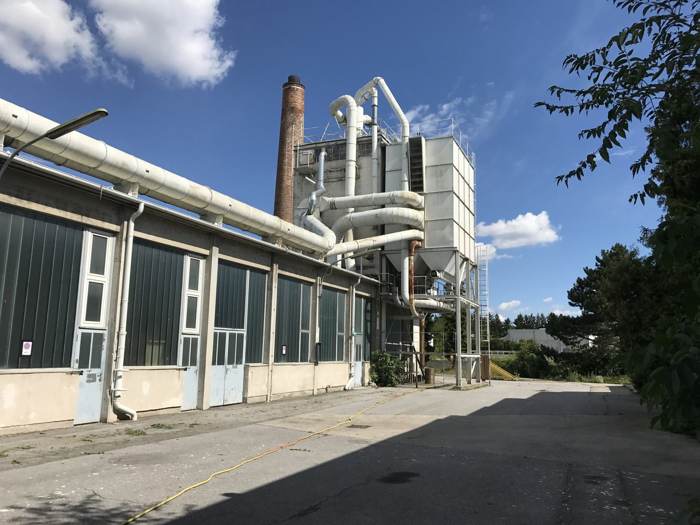
Phase 0 clarifies what a place needs and what it can take before planning begins: demand, location, condition and potential uses. At the Spinnerei Feldkirch-Gisingen it runs as the research project “Spinnerei Gisingen: Integrale Projektentwicklung für nachhaltige Baukultur” with TU Wien (Research Unit of Monument Preservation and Building in Existing Fabric) and stadtland.
It is funded by the Austrian Federal Ministry for Housing, Arts, Culture, Media and Sport through the Baukultur funding call. The pioneer phase serves as a real-world lab and as teaching material at the same time.
Who we work for
Property owners
You own a shop, a building or a hall that is empty or soon will be. We assess its condition and potential, find suitable users and support the first opening. You then decide how to continue, based on real experience.
Examples: MARKT8, Vienna · Villa Müller, Feldkirch
ENQUIRE AS AN OWNERMunicipalities and public bodies
Village centre, town centre or neighbourhood: we survey vacancy, develop a strategy and put first uses in place.
Examples: Bregenz · Schönsee · Kempten
ENQUIRE AS A MUNICIPALITYDevelopers
Years often pass between purchase, planning and the start of construction. We open the place during this time, test uses and collect data for your planning.
Examples: Funkhaus Wien · Spinnerei Feldkirch-Gisingen
ENQUIRE AS A DEVELOPER
Frequently asked questions about vacancy management and interim use
What is vacancy management?
Vacancy management brings unused buildings, spaces and sites back into use. It starts with an analysis of the existing building, opens the place for first uses and ends with a model that sustains itself in the long run.
What is a pioneer use?
A pioneer use is the first reopening of a place, with little investment and real users. It shows what works on site before money goes into a conversion. Examples are the Villa Müller in Feldkirch and the Spinnerei Feldkirch-Gisingen.
What is the difference between interim use and pioneer use?
An interim use fills the time until a later use that is already fixed, for example demolition or conversion. A pioneer use tests which use can work on site permanently, and its results feed into the planning.
What happens in Phase 0?
In Phase 0, demand, location, building condition and potential uses are examined before any planning begins. This lowers the risk of wrong decisions later on. At the Spinnerei Feldkirch-Gisingen, Phase 0 runs as a research project with TU Wien and stadtland.
My building is empty. What should I consider?
An empty building costs money every month and its condition declines. A first step is a building survey: what condition, what zoning, which uses are possible? On that basis you can decide whether an interim use, a conversion or a sale makes sense.
Does NEST work outside Vienna?
Yes. Projects include Feldkirch, Bregenz, Andelsbuch, Weiler, Trofaiach, Schönsee, Kempten, Munich and Straubing.
How is NEST different from Kreative Räume Wien?
Kreative Räume Wien is the service and advice centre for activating vacant space and interim use on behalf of the City of Vienna. NEST is a private agency. We are commissioned by owners, municipalities and developers, also outside Vienna and for industrial and listed sites.
When is a project finished?
When three foundations are in place: a community that carries the place, a robust building structure and an operating model that pays for itself in the long run.
Questions about cost, duration and permits depend on the property, so we answer them in conversation.